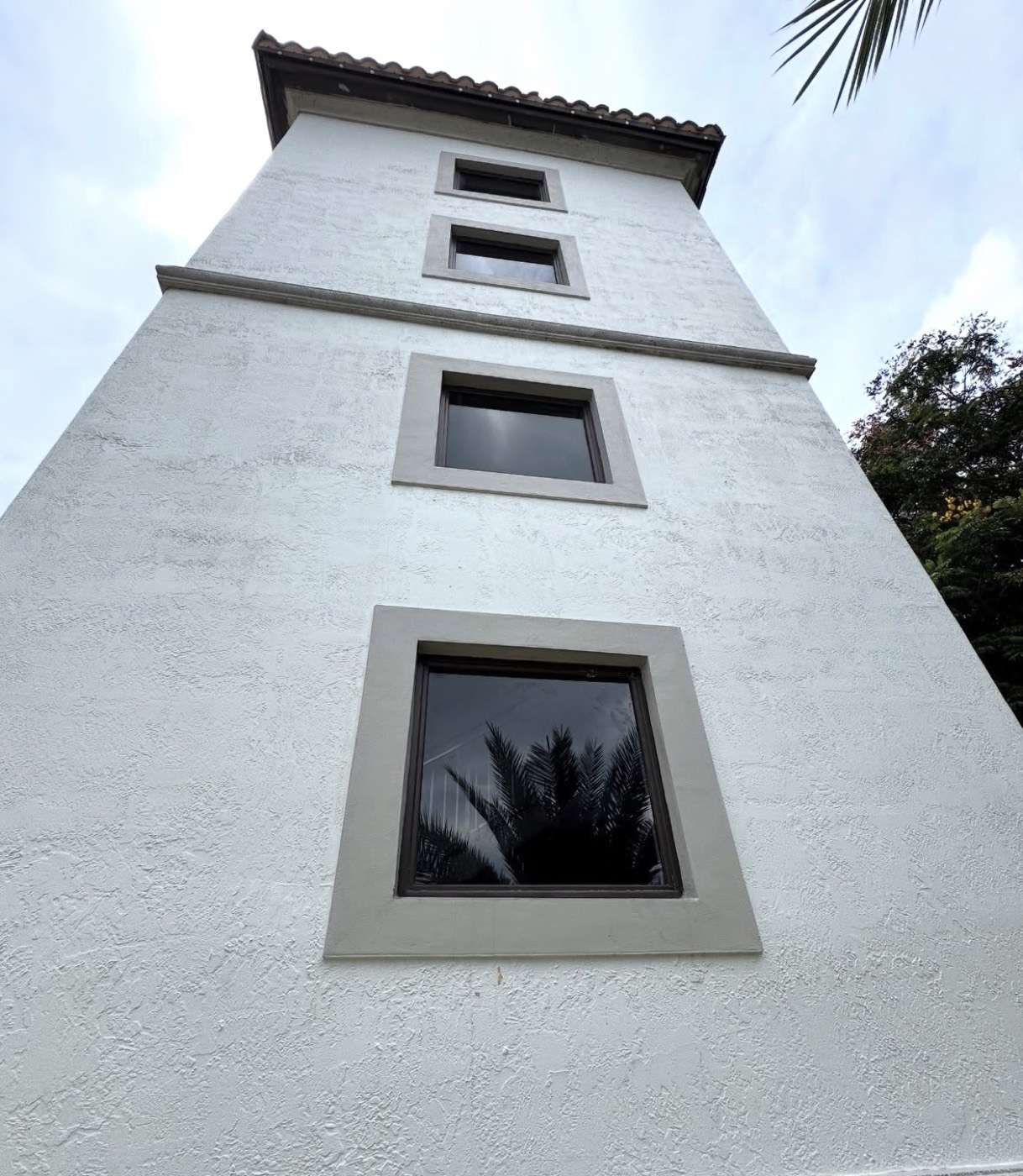
If you bought your house already built, you probably do not know for certain whether your windows are impact-rated. Nobody handed you a spec sheet at closing. It matters twice a year: once when the hurricane forecast comes out, and once when your homeowner's insurance renews. The good news is that the answer is written on the window. You just have to know where to look.
Step one: the etching in the corner
Grab a flashlight. Hold it almost flat against the glass and look at all four corners of the pane. Most glass carries a small etched mark: the manufacturer's name and a code.
- ASTM C1172 means laminated architectural glass. Two panes bonded to an interlayer. That is the construction impact glass is built on, and it is the good sign.
- ANSI Z97.1 on its own means safety glass. It will break safely, in small pieces. It will not stop a flying two-by-four.
No etching at all is common on older glass. That is not proof either way, so keep going.
Step two: the pen test
Hold a pen up against the glass and look at its reflection. Laminated glass gives you a doubled reflection sitting close together, because there is a layer of plastic in the middle of the pane. A single pane gives you one clean reflection. Treat this as a hint, not proof. Insulated units and some tints can fool it.
Step three: the label on the frame
The real answer is on the frame, not the glass. Open the window and look along the inside edge. On a slider, look at the stile, the vertical edge of the moving panel. There should be a permanent label with the manufacturer's name and either a Florida Product Approval number or a Miami-Dade Notice of Acceptance (NOA) number.
That number is public. Look it up on the Florida Building Commission's product approval site or the Miami-Dade Product Control search, and it tells you exactly what that window was tested to: the design pressure it is rated for, whether it passed large-missile impact, and what glass it was tested with. That is the proof. Everything else is a clue.
Why it matters
Insurance. A wind-mitigation inspection can earn you credits for verified opening protection, but the inspector has to find that label. Your insurer makes the final call, so ask them what they need. Storm prep. If you do not have impact glass, you need shutters, and you need to actually put them up.
What if there is nothing?
No etch, no label, and no permit on file with the county usually means they are not impact windows. It happens a lot on homes built before the current code and on windows replaced without a permit. Before you take anyone's word for it, do the three checks above yourself. They take two minutes and they are free.
If you check and you are still not sure, send us a photo of the corner of your glass and the frame label. We will tell you what you have. No charge and no pitch.